 rajiv jaiswal
1 year ago in Business Services
rajiv jaiswal
1 year ago in Business Services
High Authority Social Bookmarking Site for UAE SEO in 2026 - A2Bookmarks UAE
Welcome to A2Bookmarks UAE, a premier social bookmarking site designed for discovering and sharing the latest trends in the UAE. Our social bookmarking site for the UAE offers an engaging and seamless experience, created specifically for the UAE community. Explore popular local content on one of the leading UAE social bookmarking sites for 2026, save your favorite websites, and connect with like-minded individuals. With our intuitive interface, you can effortlessly categorize and access your bookmarks, while our vibrant community keeps you updated with relevant content. Whether you are looking for top business resources, trending entertainment, or essential local services, our platform helps you organize and discover the best of the web among the top social bookmarking sites in the UAE. Join the A2Bookmarks UAE community today to streamline your online browsing and stay ahead with curated content through the best social bookmarking sites for the UAE market.
Kundli Matchmaking: The Ancient Art of Astrological Compatibility in Marriage panditbazar.com
rajiv jaiswal
1 year ago in Business Services
Kundli Matchmaking: The Ancient Art of Astrological Compatibility in Marriage
Marriage is a profound institution in Indian culture, seen not just as a social contract but a sacred bond that ties two individuals—and often their families—for a lifetime. Among the various traditions rooted in Indian weddings, Kundli matchmaking, also known as Kundli Milan or horoscope matching, stands out as one of the oldest and most revered. This ancient Vedic practice involves comparing the birth charts (Kundlis) of the prospective bride and groom to assess compatibility across physical, emotional, and spiritual levels.
Despite the influx of modern dating apps and evolving perspectives on love and relationships, Kundli matchmaking still retains a significant place in many Indian households. But what exactly does this process entail? How does it influence marital success? And does it still hold relevance in contemporary times?
Let’s explore the meaning, process, and evolving role of Kundli matchmaking in today’s world.
What is Kundli Matchmaking?
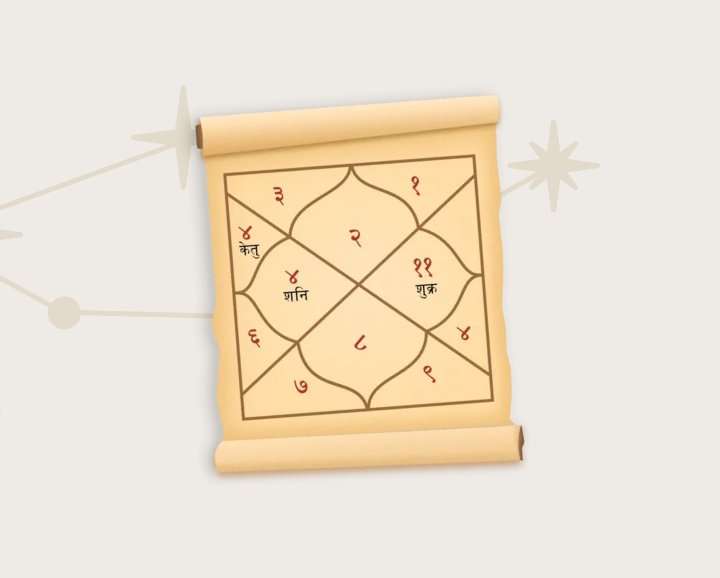
A Kundli is a birth chart created using the exact date, time, and place of a person’s birth. In Vedic astrology, it is believed that celestial bodies at the time of birth significantly influence an individual’s personality, behavior, health, career, and even marital life.
Kundli matchmaking is the process of comparing two birth charts to determine whether the energies of the two individuals will align harmoniously in marriage. It’s like decoding a cosmic compatibility meter, based on planetary placements, moon signs (Rashi), and ascendants (Lagna).
The goal isn’t just to predict compatibility in a romantic sense but to evaluate the strength of the bond across various aspects—emotional connection, physical intimacy, mental wavelength, family bonding, financial harmony, and longevity of the marriage.
The Importance of Kundli Matchmaking in Indian Culture
For centuries, Kundli matchmaking has played a critical role in arranged marriages. Families consult astrologers to ensure that the union is not only socially acceptable but astrologically favorable. The belief is that a poorly matched Kundli can lead to marital disharmony, health problems, financial instability, or even divorce.
While love marriages may bypass this process, many still seek astrological consultation before finalizing their decision, especially if there’s family pressure or traditional values at play.
The Guna Milan System: 36 Points of Compatibility
The most widely used method for Kundli matching is the Ashta-Koota Milan system, which evaluates 36 Gunas (qualities). The higher the number of matching Gunas, the better the compatibility. Let’s break down the eight Kootas:
1. Varna (1 Point)
Assesses spiritual compatibility and ego levels.
2. Vashya (2 Points)
Measures mutual attraction and power equation.
3. Tara (3 Points)
Evaluates birth star compatibility and overall well-being.
4. Yoni (4 Points)
Symbolizes sexual compatibility and intimacy.
5. Graha Maitri (5 Points)
Indicates psychological compatibility and mutual understanding.
6. Gana (6 Points)
Assesses temperament compatibility—whether the partners are dev-like (noble), manushya (human), or rakshasa (demonic).
7. Bhakoot (7 Points)
Checks financial and emotional compatibility; one of the most critical factors.
8. Nadi (8 Points)
Examines health and genetic compatibility, especially regarding childbirth. Matching Nadi is considered highly inauspicious (Nadi Dosha).
Interpretation of Points:
-
32–36 points: Excellent match
-
25–31 points: Good match
-
18–24 points: Average, workable with compromise
-
Below 18: Not recommended
Doshas in Kundli Matching
Apart from the Guna Milan, astrologers also check for Doshas, or malefic planetary positions, that can disrupt marital harmony. Some common ones include:
1. Mangal Dosha (Manglik Dosh)
Caused by Mars being in certain houses of the Kundli. It’s believed to bring aggression, tension, or misfortune in marriage. Remedies like Kumbh Vivah or specific rituals are suggested if one partner is Manglik and the other is not.
2. Nadi Dosha
As mentioned, having the same Nadi is inauspicious due to health and progeny concerns. This Dosha is often a dealbreaker unless strong points elsewhere counter it.
3. Shani (Saturn) and Rahu-Ketu Doshas
These can indicate delays, obstacles, or karmic baggage in relationships. Remedies include chanting mantras, fasting, or gemstone therapy.
The Science and Skepticism Around Kundli Matchmaking
While millions believe in Kundli matching, skeptics argue it’s unscientific and outdated. Critics point out that:
-
Modern relationships depend more on communication, emotional intelligence, and shared values than celestial patterns.
-
Many couples with high Guna matches still face divorces, and some low-score matches live happily.
-
Birth times may be inaccurate, affecting the entire Kundli analysis.
Despite these critiques, many view Kundli matching as a guiding tool rather than a strict rule. For believers, it offers spiritual assurance, while for others, it’s simply part of tradition.
Modern Perspective: Can Kundli Coexist with Compatibility Apps?
Today’s tech-savvy generation uses dating apps, personality tests, and relationship coaching. However, astrology still finds relevance in hybrid approaches. Many millennials and Gen Z couples consult both a therapist and an astrologer before taking the plunge.
Online Kundli matching platforms like AstroSage, ClickAstro, or Astrotalk have made this process digital, accessible, and even AI-assisted. You can enter birth details and get instant Guna Milan reports with explanations.
For those who want both modern rationality and spiritual guidance, Kundli matchmaking offers an extra lens to view long-term compatibility.
Tips for Interpreting Kundli Matching Wisely
-
Use it as a guide, not a guarantee: High score ≠ happy marriage; low score ≠ doomed relationship.
-
Consider personal and emotional compatibility: Astrological signs can’t replace honest communication and mutual respect.
-
Seek a credible astrologer: Avoid generalizations. A skilled astrologer considers planetary transits, Mahadasha periods, and practical remedies.
-
Don’t ignore red flags: If values or behaviors clash, a good Kundli match won’t fix emotional incompatibility.
Conclusion: A Blend of Destiny and Choice
Kundli matchmaking remains a cherished tradition that bridges astrology and human connection. Whether you see it as a scientific method, spiritual assurance, or cultural ritual, it undeniably reflects humanity’s age-old desire to seek certainty in uncertainty—especially when it comes to love and marriage.
In a world constantly changing, Kundli matching offers continuity, a cosmic whisper from the stars, urging us to think not just with the heart—but also with the heavens.
: The Ancient Art of Astrological Compatibility in Marriage
Marriage is a profound institution in Indian culture, seen not just as a social contract but a sacred bond that ties two individuals—and often their families—for a lifetime. Among the various traditions rooted in Indian weddings, Kundli matchmaking, also known as Kundli Milan or horoscope matching, stands out as one of the oldest and most revered. This ancient Vedic practice involves comparing the birth charts (Kundlis) of the prospective bride and groom to assess compatibility across physical, emotional, and spiritual levels.
Despite the influx of modern dating apps and evolving perspectives on love and relationships, Kundli matchmaking still retains a significant place in many Indian households. But what exactly does this process entail? How does it influence marital success? And does it still hold relevance in contemporary times?
Let’s explore the meaning, process, and evolving role of Kundli matchmaking in today’s world.
What is Kundli Matchmaking?
A Kundli is a birth chart created using the exact date, time, and place of a person’s birth. In Vedic astrology, it is believed that celestial bodies at the time of birth significantly influence an individual’s personality, behavior, health, career, and even marital life.
Kundli matchmaking is the process of comparing two birth charts to determine whether the energies of the two individuals will align harmoniously in marriage. It’s like decoding a cosmic compatibility meter, based on planetary placements, moon signs (Rashi), and ascendants (Lagna).
The goal isn’t just to predict compatibility in a romantic sense but to evaluate the strength of the bond across various aspects—emotional connection, physical intimacy, mental wavelength, family bonding, financial harmony, and longevity of the marriage.
The Importance of Kundli Matchmaking in Indian Culture
For centuries, Kundli matchmaking has played a critical role in arranged marriages. Families consult astrologers to ensure that the union is not only socially acceptable but astrologically favorable. The belief is that a poorly matched Kundli can lead to marital disharmony, health problems, financial instability, or even divorce.
While love marriages may bypass this process, many still seek astrological consultation before finalizing their decision, especially if there’s family pressure or traditional values at play.
The Guna Milan System: 36 Points of Compatibility
The most widely used method for Kundli matching is the Ashta-Koota Milan system, which evaluates 36 Gunas (qualities). The higher the number of matching Gunas, the better the compatibility. Let’s break down the eight Kootas:
1. Varna (1 Point)
Assesses spiritual compatibility and ego levels.
2. Vashya (2 Points)
Measures mutual attraction and power equation.
3. Tara (3 Points)
Evaluates birth star compatibility and overall well-being.
4. Yoni (4 Points)
Symbolizes sexual compatibility and intimacy.
5. Graha Maitri (5 Points)
Indicates psychological compatibility and mutual understanding.
6. Gana (6 Points)
Assesses temperament compatibility—whether the partners are dev-like (noble), manushya (human), or rakshasa (demonic).
7. Bhakoot (7 Points)
Checks financial and emotional compatibility; one of the most critical factors.
8. Nadi (8 Points)
Examines health and genetic compatibility, especially regarding childbirth. Matching Nadi is considered highly inauspicious (Nadi Dosha).
Interpretation of Points:
-
32–36 points: Excellent match
-
25–31 points: Good match
-
18–24 points: Average, workable with compromise
-
Below 18: Not recommended
Doshas in Kundli Matching
Apart from the Guna Milan, astrologers also check for Doshas, or malefic planetary positions, that can disrupt marital harmony. Some common ones include:
1. Mangal Dosha (Manglik Dosh)
Caused by Mars being in certain houses of the Kundli. It’s believed to bring aggression, tension, or misfortune in marriage. Remedies like Kumbh Vivah or specific rituals are suggested if one partner is Manglik and the other is not.
2. Nadi Dosha
As mentioned, having the same Nadi is inauspicious due to health and progeny concerns. This Dosha is often a dealbreaker unless strong points elsewhere counter it.
3. Shani (Saturn) and Rahu-Ketu Doshas
These can indicate delays, obstacles, or karmic baggage in relationships. Remedies include chanting mantras, fasting, or gemstone therapy.
The Science and Skepticism Around Kundli Matchmaking
While millions believe in Kundli matching, skeptics argue it’s unscientific and outdated. Critics point out that:
-
Modern relationships depend more on communication, emotional intelligence, and shared values than celestial patterns.
-
Many couples with high Guna matches still face divorces, and some low-score matches live happily.
-
Birth times may be inaccurate, affecting the entire Kundli analysis.
Despite these critiques, many view Kundli matching as a guiding tool rather than a strict rule. For believers, it offers spiritual assurance, while for others, it’s simply part of tradition.
Modern Perspective: Can Kundli Coexist with Compatibility Apps?
Today’s tech-savvy generation uses dating apps, personality tests, and relationship coaching. However, astrology still finds relevance in hybrid approaches. Many millennials and Gen Z couples consult both a therapist and an astrologer before taking the plunge.
Online Kundli matching platforms like AstroSage, ClickAstro, or Astrotalk have made this process digital, accessible, and even AI-assisted. You can enter birth details and get instant Guna Milan reports with explanations.
For those who want both modern rationality and spiritual guidance, Kundli matchmaking offers an extra lens to view long-term compatibility.
Tips for Interpreting Kundli Matching Wisely
-
Use it as a guide, not a guarantee: High score ≠ happy marriage; low score ≠ doomed relationship.
-
Consider personal and emotional compatibility: Astrological signs can’t replace honest communication and mutual respect.
-
Seek a credible astrologer: Avoid generalizations. A skilled astrologer considers planetary transits, Mahadasha periods, and practical remedies.
-
Don’t ignore red flags: If values or behaviors clash, a good Kundli match won’t fix emotional incompatibility.
Conclusion: A Blend of Destiny and Choice
Kundli matchmaking remains a cherished tradition that bridges astrology and human connection. Whether you see it as a scientific method, spiritual assurance, or cultural ritual, it undeniably reflects humanity’s age-old desire to seek certainty in uncertainty—especially when it comes to love and marriage.
In a world constantly changing, Kundli matching offers continuity, a cosmic whisper from the stars, urging us to think not just with the heart—but also with the heavens.
voters
Report Story 
Related Stories











Recent Stories