 Canberra Skin Cancer
3 months ago in Business Services
Canberra Skin Cancer
3 months ago in Business Services
High Authority Social Bookmarking Site for UAE SEO in 2026 - A2Bookmarks UAE
Welcome to A2Bookmarks UAE, a premier social bookmarking site designed for discovering and sharing the latest trends in the UAE. Our social bookmarking site for the UAE offers an engaging and seamless experience, created specifically for the UAE community. Explore popular local content on one of the leading UAE social bookmarking sites for 2026, save your favorite websites, and connect with like-minded individuals. With our intuitive interface, you can effortlessly categorize and access your bookmarks, while our vibrant community keeps you updated with relevant content. Whether you are looking for top business resources, trending entertainment, or essential local services, our platform helps you organize and discover the best of the web among the top social bookmarking sites in the UAE. Join the A2Bookmarks UAE community today to streamline your online browsing and stay ahead with curated content through the best social bookmarking sites for the UAE market.
Should You Visit a GP or a Skin Cancer Clinic Complete Guide canberraskincancerclinic.com.au
Canberra Skin Cancer
3 months ago in Business Services
Skin cancer is one of the most common forms of cancer worldwide, yet it is also one of the most treatable when detected early. If you’ve noticed a new mole, a spot that has changed in size or colour, or a lesion that won’t heal, it’s natural to wonder where you should seek medical advice. Should you visit your General Practitioner (GP), or should you book an appointment directly with a dedicated skin cancer clinic?
The answer depends on your symptoms, medical history, risk factors, and the type of care you need. Both GPs and skin cancer clinics play important roles in skin health, but they offer different levels of expertise, equipment, and treatment options.
This comprehensive guide explains the differences between a GP and a skin cancer clinic, helping you make an informed decision about the best place to start your skin health journey.
Understanding Skin Cancer
Skin cancer develops when abnormal skin cells grow uncontrollably. The primary cause is prolonged exposure to ultraviolet (UV) radiation from the sun or tanning beds. While anyone can develop skin cancer, individuals with fair skin, frequent sun exposure, a family history of skin cancer, or multiple moles are generally at higher risk.
The three main types include:
Basal Cell Carcinoma (BCC)
Basal Cell Carcinoma is the most common type of skin cancer. It usually grows slowly and rarely spreads to other parts of the body. However, untreated BCC can damage nearby tissue.
Common signs include:
- Pearly or shiny bumps
- Non-healing sores
- Pink or red patches
- Small bleeding lesions
Squamous Cell Carcinoma (SCC)
Squamous Cell Carcinoma develops in the outer layers of the skin and can spread if left untreated.
Symptoms include:
- Thick, scaly patches
- Wart-like growths
- Open sores
- Tender or crusted lesions
Melanoma
Melanoma is the most serious form of skin cancer because it can spread rapidly to other organs.
Watch for:
- Changes in existing moles
- New dark spots
- Irregular borders
- Multiple colours
- Rapid growth
Early detection dramatically improves treatment outcomes.
What Does a GP Do?
A General Practitioner is usually the first healthcare professional people consult for health concerns.
When it comes to skin issues, a GP can:
- Examine suspicious moles
- Assess skin rashes
- Diagnose common skin conditions
- Identify warning signs of skin cancer
- Refer patients to specialists
- Arrange biopsies in some cases
- Provide ongoing healthcare management
Many GPs receive training in recognising skin cancers, although the level of expertise varies depending on additional qualifications and clinical experience.
Benefits of Seeing a GP First
Convenient Access
GP clinics are widely available and often easier to access, making them a practical starting point for many patients.
Whole-Patient Care
Because GPs manage your overall health, they consider your medical history, medications, family history, and other conditions when assessing skin concerns.
Cost-Effective
Consulting a GP may be more affordable than visiting a specialist clinic, depending on your healthcare system and insurance coverage.
Appropriate Referrals
If your GP identifies a suspicious lesion, they can refer you to a dermatologist, surgeon, or skin cancer clinic for further investigation or treatment.
Limitations of a GP
While GPs are highly trained medical professionals, they may have limitations when managing complex skin cancer cases.
These may include:
- Limited access to specialised imaging equipment
- Less experience with difficult or rare skin lesions
- Longer referral pathways
- Fewer in-house treatment options
This does not mean GPs cannot diagnose skin cancer—many do—but specialist clinics often focus exclusively on skin health.
What Is a Skin Cancer Clinic?
A skin cancer clinic is a medical practice dedicated to the detection, diagnosis, treatment, and prevention of skin cancers.
These clinics often include healthcare professionals with advanced training in skin cancer medicine, including:
- Doctors with additional skin cancer qualifications
- Dermatologists
- Skin cancer physicians
- Surgical practitioners
Many clinics also invest in advanced diagnostic technology designed specifically for examining skin lesions.
Services Offered at a Skin Cancer Clinic
A dedicated skin cancer clinic commonly provides:
- Comprehensive skin examinations
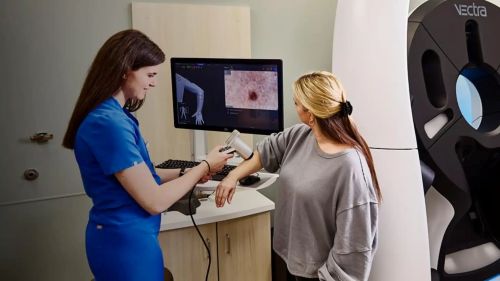
- Digital mole mapping
- Dermoscopic imaging
- Skin biopsies
- Mole removal
- Surgical excision
- Cryotherapy
- Follow-up surveillance
- Skin cancer education
- Preventive skin checks
Many clinics can diagnose and treat patients during the same visit, reducing delays.
Advanced Diagnostic Technology
One major advantage of specialised clinics is access to modern diagnostic equipment.
Examples include:
Dermoscopy
A dermatoscope magnifies skin structures invisible to the naked eye, helping clinicians distinguish harmless moles from suspicious lesions.
Digital Mole Mapping
High-resolution photographs document every mole across the body.
Future skin checks can compare new images against previous ones, allowing subtle changes to be detected much earlier.
Total Body Photography
Patients with numerous moles or a high melanoma risk often benefit from full-body imaging to monitor changes over time.
Who Should Visit a Skin Cancer Clinic?
You may benefit from attending a specialised clinic if you:
- Have multiple atypical moles
- Have a personal history of skin cancer
- Have a strong family history of melanoma
- Notice rapid changes in a mole
- Have recurring suspicious lesions
- Need ongoing skin surveillance
- Require mole removal
- Want regular preventive skin checks
GP vs Skin Cancer Clinic: Key Differences
| Feature | GP | Skin Cancer Clinic |
|---|---|---|
| Initial assessment | Yes | Yes |
| Full body skin checks | Sometimes | Yes |
| Dermoscopy | Some clinics | Common |
| Digital mole mapping | Rare | Frequently available |
| Biopsies | Some GPs | Common |
| Surgical removal | Limited | Common |
| Specialist expertise | General medicine | Focused skin cancer care |
| Ongoing skin surveillance | Limited | Comprehensive |
When Should You See a GP?
A GP is often the right choice if:
- You have a new skin concern.
- You’re unsure whether a spot is serious.
- You need an initial medical opinion.
- You have several unrelated health concerns.
- You require referrals to specialists.
When Should You Visit a Skin Cancer Clinic?
Consider a specialised clinic if:
- You have a suspicious mole.
- Your mole has changed rapidly.
- You need a comprehensive skin examination.
- You have previously had skin cancer.
- You’re considered high risk.
- You require ongoing monitoring.
Warning Signs You Should Never Ignore
Seek medical attention promptly if you notice:
- A mole changing size, shape, or colour
- Bleeding without injury
- Persistent itching
- Painful skin lesions
- Non-healing sores lasting more than four weeks
- Rapidly growing bumps
- Dark streaks beneath fingernails or toenails
The ABCDE rule is a useful guide:
- A – Asymmetry
- B – Border irregularity
- C – Colour variation
- D – Diameter larger than 6 mm
- E – Evolving or changing
What Happens During a Skin Check?
A skin examination usually includes:
- Medical history review
- Discussion of family history
- Assessment of sun exposure
- Full-body skin examination
- Dermoscopic evaluation of suspicious lesions
- Documentation of findings
- Discussion of treatment if necessary
Most appointments take between 15 and 30 minutes, depending on the number of lesions examined.
Are Biopsies Painful?
A skin biopsy is generally performed under local anaesthetic.
The area is numbed before a small sample—or the entire lesion—is removed for laboratory analysis. Most patients experience only mild discomfort and recover quickly.
Treatment Options
Treatment depends on the type and stage of skin cancer.
Options may include:
- Surgical excision
- Cryotherapy
- Curettage
- Topical medications
- Photodynamic therapy
- Radiation therapy
- Immunotherapy (for advanced melanoma)
- Targeted therapy
Early-stage cancers are often treated successfully with minor procedures.
Can Skin Cancer Be Prevented?
Although not every case can be prevented, your risk can be significantly reduced.
Protect your skin by:
- Wearing broad-spectrum sunscreen (SPF 30 or higher)
- Avoiding midday sun
- Wearing hats and protective clothing
- Using sunglasses with UV protection
- Avoiding tanning beds
- Performing monthly self-examinations
- Scheduling professional skin checks if you’re at higher risk
Frequently Asked Questions
Can my GP diagnose skin cancer?
Yes. Many GPs can recognise suspicious lesions and may diagnose or biopsy some skin cancers. More complex cases are often referred for specialist assessment.
Do I need a referral to visit a skin cancer clinic?
This depends on your healthcare system and the clinic. Many private skin cancer clinics accept patients without a referral.
How often should I have a skin check?
People at average risk should discuss screening frequency with their healthcare provider. Those with a history of skin cancer or significant risk factors may benefit from annual—or sometimes more frequent—skin examinations.
Are skin cancer clinics more accurate?
Specialised clinics often have advanced diagnostic equipment and clinicians with extensive experience in skin cancer detection, which can enhance assessment, particularly for complex or high-risk cases.
Is every changing mole cancer?
No. Many moles change for harmless reasons, but any new or evolving lesion should be assessed by a healthcare professional.
Final Thoughts
Choosing between a GP and a skin cancer clinic doesn’t have to be an either-or decision. A GP is an excellent starting point for many people, particularly if you’re experiencing a new skin concern or need a general health assessment. However, if you are at increased risk of skin cancer, require regular surveillance, or have a suspicious lesion that needs specialised evaluation, a dedicated skin cancer clinic may offer more comprehensive assessment and treatment options.
The most important step is not delaying evaluation. Early detection remains the single most effective way to improve outcomes for all types of skin cancer. If you notice any unusual changes in your skin, arrange a professional assessment promptly. Acting early can make a significant difference to diagnosis, treatment, and long-term skin health.
voters
Report Story 
Related Stories











Recent Stories