 Rahul Kumar
20 hours ago in Business Services, Home Services, Marketing & Advertising, Technology & IT Services
High Authority Social Bookmarking Site for UAE SEO in 2026 - A2Bookmarks UAE
Welcome to A2Bookmarks UAE, a premier social bookmarking site designed for discovering and sharing the latest trends in the UAE. Our social bookmarking site for the UAE offers an engaging and seamless experience, created specifically for the UAE community. Explore popular local content on one of the leading UAE social bookmarking sites for 2026, save your favorite websites, and connect with like-minded individuals. With our intuitive interface, you can effortlessly categorize and access your bookmarks, while our vibrant community keeps you updated with relevant content. Whether you are looking for top business resources, trending entertainment, or essential local services, our platform helps you organize and discover the best of the web among the top social bookmarking sites in the UAE. Join the A2Bookmarks UAE community today to streamline your online browsing and stay ahead with curated content through the best social bookmarking sites for the UAE market.
How Can You Plan Home Automation for a New House? ziotech.ae
Rahul Kumar
20 hours ago in Business Services, Home Services, Marketing & Advertising, Technology & IT Services
Building a new house is a good time to plan smart devices and security features. Home automation allows homeowners to control lights, air conditioning, door locks, cameras, and other devices through a mobile phone or a central control system. Planning these features during construction can make installation easier and help avoid extra wiring work later. A clear plan also helps you choose the right devices based on your daily needs, home layout, and budget.
1. Understand Your Daily Home Needs
Before choosing any smart device, think about how you use your home every day. Every family has different needs, so it is better to plan features that solve real problems.
For example, some homeowners may want automatic lighting in hallways, while others may need smart door locks or security cameras. If you have children, you may want to check who enters the house when you are away. If you travel often, remote access to selected devices can also be useful.
Make a list of the activities you want to control through smart technology. This will help you understand which features are important and which ones you can add later.
2. Plan Smart Lighting Before Construction
Lighting is one of the easiest features to include in a new house. Smart lighting allows you to control different lights using a mobile app, wall switch, or voice command.
Think about the rooms where automatic lighting can be useful. For example, motion sensors can switch on hallway lights when someone walks through them. Bedroom lights can be controlled separately, while living room lights can be adjusted for reading, watching television, or relaxing.
You should also decide where to install smart switches and sensors. Planning these locations before electrical work begins can help reduce changes during installation.
3. Decide Where Security Cameras Are Needed
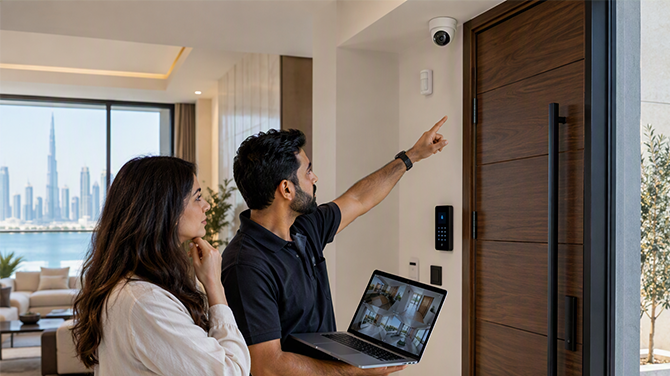
Home security should be part of the early planning process. A new house gives you more flexibility to decide where cameras, sensors, and other security devices should be installed.
Start by checking the main entry points, such as front doors, back doors, garages, and outdoor areas. These locations may need camera coverage to help you monitor activity around the property.
Also consider the following points:
-
Place cameras where they can cover important entry areas.
-
Avoid placing cameras where walls or trees block the view.
-
Plan suitable power connections for each camera.
-
Keep recording equipment in a secure location.
-
Check that outdoor cameras are suitable for local weather conditions.
Good camera placement can help reduce blind spots and make it easier to monitor different areas of your home.
4. Choose Smart Door Locks and Entry Controls
Doors are another important part of a home security plan. Smart door locks can provide different ways to enter your house, depending on the model and its features.
Some locks support PIN codes, fingerprints, mobile apps, or access cards. These options can be useful when family members need to enter the house without carrying a physical key.
Before choosing a lock, check whether it fits your door type and existing hardware. You should also understand how it works during a power or internet failure.
If several people need access, look for a system that allows you to manage different users. This can make it easier to control who can enter your property.
5. Plan Network and Wi-Fi Coverage
A reliable internet connection is important for many smart home devices. Cameras, sensors, smart locks, and mobile control systems may depend on a stable network to work correctly.
Do not wait until the house is complete to think about Wi-Fi coverage. Large houses, villas, and properties with several floors may have weak signals in some rooms.
Consider planning network points in important areas. You may also need Wi-Fi access points to improve coverage.
It is useful to check:
-
Which devices need a Wi-Fi connection.
-
Where network cables should be installed.
-
Whether outdoor areas need network coverage.
-
How many devices may connect at the same time.
-
Whether the router can support your expected usage.
A well-planned network can help smart devices communicate more reliably.
6. Select Devices That Work Together
Not every smart device works with every control system. Some products use different communication methods, applications, and connection standards.
Before purchasing equipment, check whether the devices can work together. For example, you may want your smart lights, cameras, sensors, and door locks to be managed through one main application.
Choosing compatible products can make daily use easier. It can also reduce the need to manage several different applications.
Ask about supported connection standards and whether the system allows you to add more devices in the future. This is especially useful if you want to expand your setup after moving into the house.
7. Set a Budget for Each Feature
Planning a smart home does not mean installing every available device at once. It is better to divide your budget according to your main requirements.
Start with important features such as security cameras, door locks, lighting controls, and network equipment. You can then consider additional features like automated curtains, smart speakers, and climate controls.
Remember that the total cost may include more than the devices themselves. Installation, wiring, control panels, software, and maintenance can also affect your budget.
Getting installation estimates before construction is complete can help you avoid unexpected expenses. It also allows you to compare different equipment options.
8. Think About Privacy and Data Security
Smart devices can collect information about activities inside and around your home. Cameras may record video, while connected locks and sensors may store access or activity details.
For this reason, privacy should be considered when planning your system.
Use strong passwords for your devices and change default login details. Enable additional account protection when available. Keep device software updated to reduce security risks.
You should also check where camera recordings are stored and who can access them. Avoid sharing access details with people who do not need them.
These simple steps can help protect your home network and connected devices.
9. Keep Space for Future Upgrades
Your requirements may change after you start living in your new house. You may later want more cameras, additional sensors, or new lighting controls.
Try to keep your system flexible from the beginning. Extra wiring points, suitable network connections, and enough space for control equipment can make future upgrades easier.
You do not need to install every feature during the first stage. However, preparing the house for possible changes can save time and installation costs later.
A flexible setup also makes it easier to replace older devices when newer technology becomes available.
10. Test Everything Before Moving In
Once installation is complete, test all connected devices before moving into the house. Check whether cameras show clear images, smart locks respond correctly, and sensors detect movement as expected.
Test mobile applications and remote access from outside the property. Also check what happens when the internet connection is interrupted or a device loses power.
Ask the installer to explain how to use the system, change settings, add users, and solve common problems. Keep important instructions and access details in a safe place.
Testing each feature early gives you time to correct installation issues before the house becomes occupied.
Planning a new house requires attention to wiring, security, network coverage, and future needs. Home automation should be planned around the way your family uses each room rather than simply adding more connected devices. By selecting compatible equipment, preparing security points, and allowing space for future upgrades, you can create a practical system that is easier to manage and maintain.
voters
Report Story 
Related Stories











Recent Stories