 Cooperative Computing
4 months ago in Business Services
Cooperative Computing
4 months ago in Business Services
High Authority Social Bookmarking Site for UAE SEO in 2026 - A2Bookmarks UAE
Welcome to A2Bookmarks UAE, a premier social bookmarking site designed for discovering and sharing the latest trends in the UAE. Our social bookmarking site for the UAE offers an engaging and seamless experience, created specifically for the UAE community. Explore popular local content on one of the leading UAE social bookmarking sites for 2026, save your favorite websites, and connect with like-minded individuals. With our intuitive interface, you can effortlessly categorize and access your bookmarks, while our vibrant community keeps you updated with relevant content. Whether you are looking for top business resources, trending entertainment, or essential local services, our platform helps you organize and discover the best of the web among the top social bookmarking sites in the UAE. Join the A2Bookmarks UAE community today to streamline your online browsing and stay ahead with curated content through the best social bookmarking sites for the UAE market.
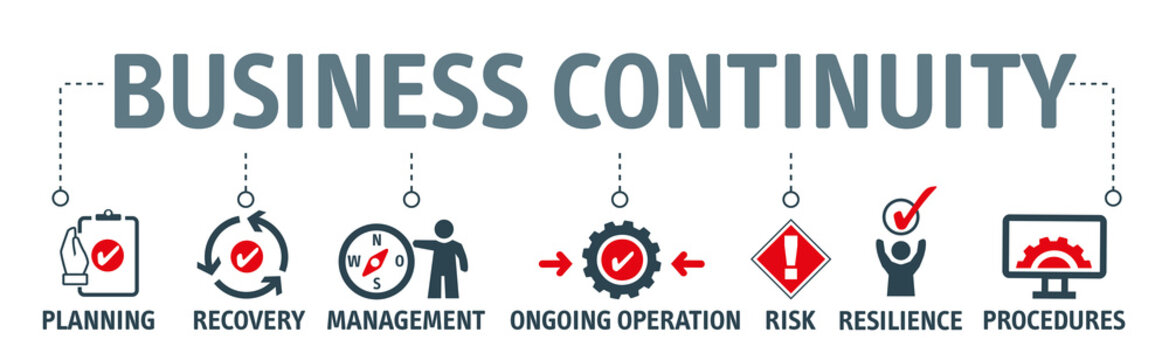
Business Continuity Planning: Step-by-Step Guide to Protect Your Operations earlyalert.com
Cooperative Computing
4 months ago in Business Services
Disruptions rarely arrive in isolation. A severe weather event triggers supply chain delays. A cyber incident slows internal systems. Workforce availability drops while leadership faces mounting pressure to act fast, and without complete information.
In these moments, organizations are not judged by the plans they have documented, but by how effectively they maintain control.
This is where business continuity planning shifts from a compliance exercise to a leadership capability. The real challenge is not anticipating disruption; it is sustaining clarity, coordination, and decision-making as conditions evolve by the minute.
Why Plans Exist—but Control Still Breaks Down
Many organizations invest heavily in continuity frameworks, yet still experience breakdowns when disruptions escalate. The gap is not in intent—it is in execution.
Common failure points include:
- Static plans that cannot adapt to dynamic, multi-layered disruptions
- Fragmented systems that limit visibility across teams and locations
- Delayed or incomplete information reaching decision-makers
- Overreliance on documentation instead of real-time intelligence
At the core of this issue is a critical reality: vulnerability often determines impact more than the hazard itself.
A well-documented plan does not guarantee operational control. Without the ability to translate intelligence into action, even the most detailed frameworks can fall short under pressure.
From Static Plans to a Leadership System
Continuity must evolve beyond documentation. It should function as a structured system that supports real-time leadership decisions.
This means shifting the mindset:
- From plans to decision-support intelligence
- From isolated functions to cross-enterprise alignment
- From periodic reviews to continuous operational readiness
Effective continuity operates across a defined lifecycle: prepare, respond, manage, recover, resume, and monitor.
Each phase is interconnected. Decisions made early influence outcomes later. Visibility in one stage determines effectiveness in the next.
When continuity is structured this way, it does more than protect operations—it preserves leadership control, ensures coordination, and enables faster, more confident decision-making.
A Six-Step Framework for Operational Continuity
To move from theory to execution, organizations need a clear, integrated approach that works under real-world conditions.
1. Align Leadership Around Clear Objectives
Continuity begins with clarity at the top. Define roles, escalation pathways, and decision authority before disruption occurs. Leadership alignment ensures that when pressure builds, decisions are made quickly and without ambiguity.
2. Identify Critical Functions and Dependencies
Not all operations carry equal weight. Determine which functions are essential to sustaining operations and map the dependencies that support them—across supply chains, workforce, infrastructure, and systems. Focus on what is most likely to fail first.
3. Establish Real-Time Operational Visibility
Situational awareness is the foundation of effective response. Organizations must move beyond static reporting and build a live operational picture that integrates data, context, and expert analysis. This enables leaders to understand not just what is happening, but what it means for their operations.
4. Structure Response Through Coordinated Execution
Execution requires more than intent. Predefined response frameworks ensure that teams act in a coordinated, consistent manner across locations. Integrating expert-led support strengthens decision-making and reduces the risk of fragmented actions.
5. Strengthen Communication as a Control Mechanism
Communication is not just an operational function—it is a leadership tool. Rapid, secure, and targeted messaging ensures alignment across teams, stakeholders, and leadership. Two-way communication also enables feedback, accountability, and situational clarity.
6. Validate Through Realistic Testing and Exercises
Plans must be tested under conditions that reflect real-world complexity. Scenario-based exercises expose gaps in coordination, decision-making, and execution. These insights are critical to refining strategies and strengthening readiness over time.
Together, these steps create a system that is not only structured but adaptable—capable of sustaining operations in the face of evolving challenges.
Elevating Continuity to a Strategic Priority
Continuity is no longer confined to operational teams. It has become a strategic priority tied directly to governance, compliance, and organizational resilience.
Leaders are expected to demonstrate:
- Alignment with recognized standards such as ISO 22301, NFPA 1660, and FEMA/NIMS
- Clear documentation of response strategies and decision pathways
- The ability to maintain operations while protecting people, assets, and brand value
At this level, continuity is not just about readiness—it is about accountability. It provides boards and stakeholders with assurance that the organization can navigate disruption with structure, clarity, and control.
From Planning to Decision-Ready Operations
Disruption will continue to evolve in scale and complexity. The organizations that maintain control will not be those with the most detailed plans, but those that can act decisively when it matters most.
This requires more than preparation. It demands integration of intelligence, expertise, and execution.
By aligning leadership, establishing real-time visibility, and operationalizing response, continuity becomes a capability rather than a document. It enables leaders to move forward with confidence, even in uncertain conditions.
In the end, continuity is not defined by what is written. It is defined by how effectively an organization responds when the unexpected becomes reality.
voters
Report Story 
Related Stories











Recent Stories